



Swallowing my pride: learning to accept help after my diagnosis
Swallowing my pride: learning to accept help after my diagnosis
Emma O'Brien

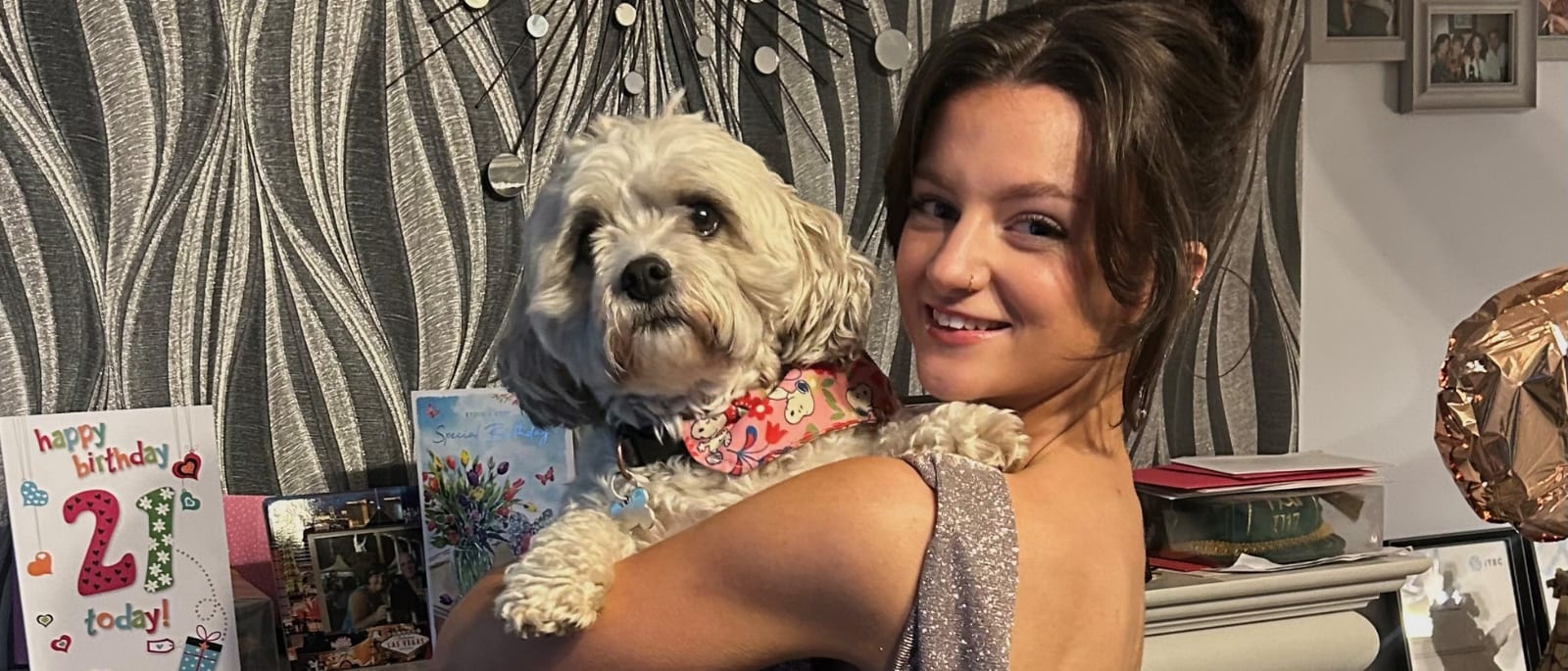
Twenty-one-year-old Emma O’Brien lives in Dublin. She was diagnosed with rheumatoid arthritis (RA) when she was sixteen and initially found it very hard to come to terms with her diagnosis. Emma recently graduated with a BA in Communications from Dublin City University.
Ignoring symptoms during lockdown
“I started experiencing symptoms in March 2020 but didn’t realise something was wrong for quite some time. During lockdown, I did what everyone else was doing. I started running because I couldn’t play my beloved Gaelic.
“The pain started in my hips and knees, but I presumed it was down to the running and possibly wearing the wrong shoes. To be honest, I didn’t even tell anyone what was going on. When the country opened back up in August, I went back to Gaelic but I felt like I was running under water. My legs just wouldn’t work. Still, I didn’t say anything.”
Pain that spreads to all parts of my body
“When I went into fifth year, I realised something was wrong because the pain went into my shoulders. Soon after it progressed to not just my hips, knees and shoulders, even my elbows, my wrists and my jaw. It was literally everywhere.
“It was really getting in the way of everything. I couldn’t play Gaelic, but also everyday things were affected. Getting dressed, doing my own hair in the morning, or even using a pen for those first few classes were all a struggle because I was so stiff. I was getting no sleep. Eventually I ended up in A&E because things had become so bad. It was there that they took my bloods and mentioned me seeing a rheumatologist. But I remember saying, ‘There’s no way it’s arthritis’ because I thought I was far too young to have it.”
A manageable, not curable condition
“At the time, I very much had the mindset of wanting to get back to things I enjoyed, like Gaelic and going to the gym. It was just a matter of getting ‘fixed’ and then life goes on. But then to be told, This is a manageable, but not curable condition’ was a real shock.
“I was given an Arthritis Ireland booklet, and I read through it. I also went onto the website and read the blogs and also the first-hand stories of other people. I found comfort in reading a story about a young girl like me who managed to get back to playing Gaelic. That really helped. I also then signed up to the Arthritis Ireland LinkedIn page, and I still follow that today for any useful tips and updates. I was prescribed steroids and another medication that made me feel nauseous for months. So, eventually I went back and we tried a biologic, and it worked wonders. I’m on it to this day and it’s been very successful. Of course, I still have flares, and they are hard to deal with, but overall, I’m doing very well. I try to stay fit by walking my dog and doing weight-lifting at the gym. I follow a full mobility routine for my knees, hips and shoulders about three or four times a week.”
Struggling to accept family support
“At that age, I really didn’t want my family to help me. I was struggling with accepting the help but, still, they helped me. Not just physically – such as picking things up, or my mum doing my hair (which was tough as I felt very defeated by that), but they would also read and try to educate themselves about my condition.
“Both of my brothers studied sports therapy, and they would talk about exercises I could do, or offer to tape up my knees. My mum would read about things that could help and share them with me. My dad brought home aids like arthritis compression gloves that provided me comfort. They also got me support from an occupational therapist, and she recommended this brilliant ‘pen cushion’ which took the pressure off my hand when writing during exams. When it comes to my family, it’s difficult to know that they had to see me in such pain, and to see that I struggled to accept their help. But they never stopped trying. I just hope they know that they did more than enough.”
Coping with flares and other challenges
“The thing that is still hard is that my immune system is compromised, so I do get sick quite a bit. I also have flares. I must be quite careful about my diet. I was vegetarian for a while, but then I had a lot of infections and was really out of whack for so long last year, so I started introducing more of what I needed in my diet. Today, it’s very balanced – three meals a day plus snacks, and I also take a multi-vitamin. I also keep up to date with my vaccines.
“I had a flare over Christmas, and it was tough, but I’m learning to try to look at it more positively. I think it’s important not to let a flare feel like a total setback. They do pass and they are manageable. You do have to cancel plans and really rest. You must take the anti-inflammatories, but it does pass. I have to say to myself, ‘You’ve done this before, you know how it goes, things will get better.’”
Feeling less alone and stronger with time
“When I was first diagnosed, I think I felt quite alone with it. I was so afraid of what people would think or say if they found out, so I tried to keep it a secret. I thought that nobody else in the world could possibly understand how difficult it was. Because it’s a pain that you can barely describe until you’ve experienced it yourself.
“Even today, I find it difficult to tell new people. I did discuss it with a woman in my previous job, because she had a daughter around the same age as me with the same condition. It helped me to feel like I wasn’t the only one. Her daughter was struggling to find the right medication and that also made me feel very grateful that I had found one that worked so well. In that way, sharing it with someone else took me out of my own head. Looking back, I know now that I struggled to accept help because I didn’t want to feel weak. I’ve always prided myself on being a strong person but now I realise that accepting help isn’t a sign of weakness. I now ask for help when I need it. To show up every day, to adjust and readjust, to deal with all I have dealt with, is the strongest I’ve ever been.”
For more information
Download our rheumatoid arthritis booklet, which covers symptoms, risk factors, diagnosis, treatment and self-management skills.
Watch our video conversation series all about living with RA. In this conversation, we are joined by Dr Carmel Silke, Consultant Rheumatologist from the North-West Rheumatology Clinic.
Check out our self-management course, including Living Well with Arthritis (LWWA), our flagship, six-week, award-winning course which will equip you with a variety of tools and techniques to help self-manage your condition.
resources
Related Resources
 ‘But you look fine’: the challenges of living with an invisible illness
 Arthritis Ireland’s osteoporosis awareness campaign
 “I felt like I’d break if a child on the street bumped into me”
 Osteoporosis: 6 myths that could put your bones at risk
 Living with Osteoporosis with Dr Abuelmagd Abdalla
 Living with Osteoporosis
 Farming and arthritis
 Arthritis Ireland National Raffle 2026
Support Our Mission
Your donation helps us provide essential support, fund research, and improve the lives of those living with arthritis. Every contribution matters — help us make a difference today.
