



Putting the pieces together & relearning self-care
Putting the pieces together & relearning self-care
Fiona Stevenson

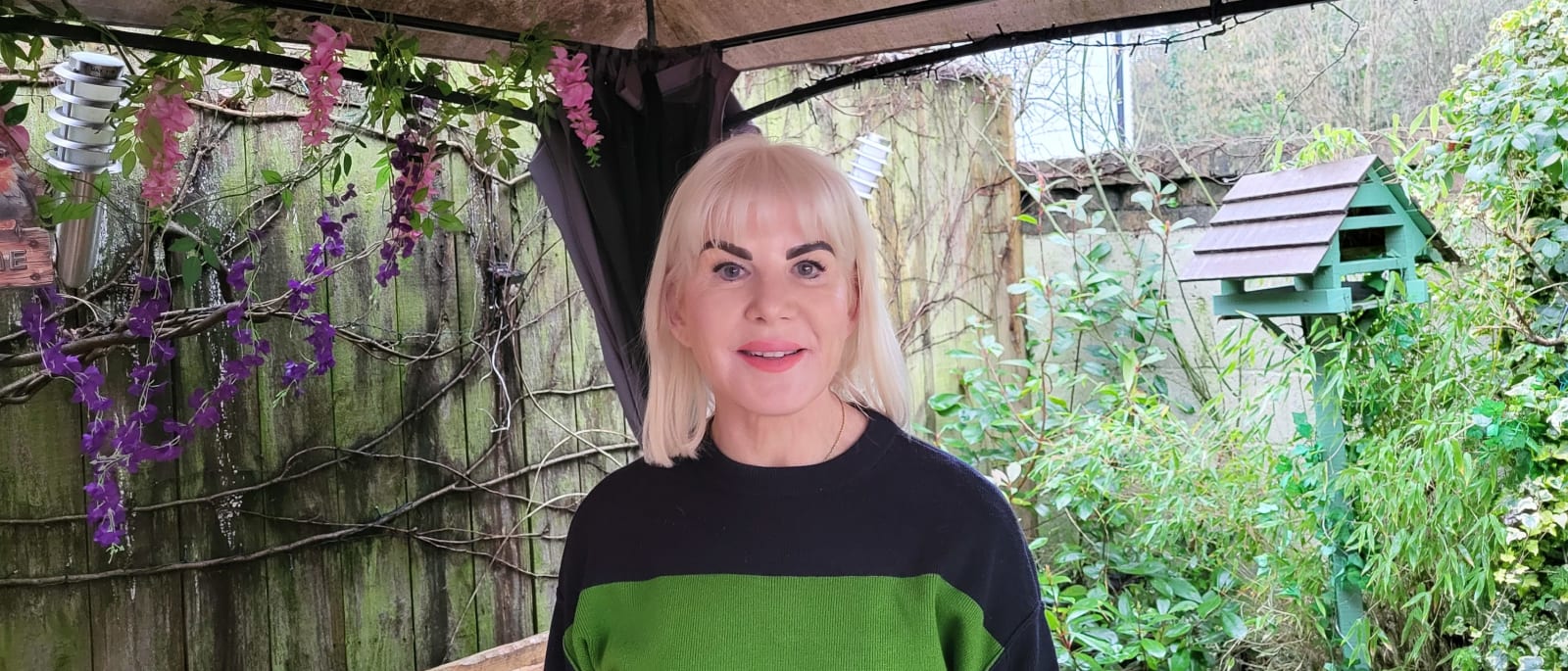
Fiona, who is in her fifties, was recently diagnosed with lupus. She lives in Kildare, has three grown up sons and has previously worked for the Ambulance Service in Dublin’s city centre.
A late diagnosis
“I am a late developer of lupus, in that I know that most women tend to be diagnosed in their late teens to mid-thirties. I have been probably living with it for a long time, but I put down the symptoms to the nature of my work, which is shift work and it is also very demanding. Although I work in the medical field, I wouldn’t see anything like lupus at work because I deal with acute things every day, rather than chronic diseases like arthritis.
“It began slowly and subtly. Aching hands after long shifts, stiff fingers in the mornings and a deep fatigue that sleep couldn’t fix. There were also migraines and a general feeling of malaise. I was sure it was down to overwork, or natural ageing. I thought to myself, ‘Maybe this is just what middle-aged tiredness feels like! I also thought it was probably osteoarthritis. But my fingers became swollen and the small joints became extremely hot and tender. I knew then that it was something more.”
A process of elimination
“When I went to the GP with symptoms. He sent me for several investigations and scans. They showed that I had gallstones and kidney stones. So, then I had the gallbladder removed. After having the gallbladder removed, I was still sick. Then I had kidney stones removed, but I was still sick. All my organs seemed to have problems – digestive, small bowel, kidneys, liver, and unusual ECG readings. It was systemic. Blood tests showed that my inflammatory markers were still very high. It was a process of elimination. I think the diagnosis took a while because I didn’t have the butterfly rash, so I didn’t present as a typical lupus patient.
“I told them about my family history and then all the pieces of the jigsaw began to come together to give me the diagnosis. I explained my mother had osteoarthritis and my grandmother had struggled with “rheumatism” for many years. I can still remember an ambulance calling to her house each Friday to bring her to hospital for gold injections. This was in 1970. Of course, decades of trials and research have massively improved since then. A regime of medication, lifestyle changes is the armour we now have for protection.
A mix of relief and dread
“My diagnosis was a blend of relief and dread. Relief that I finally had an answer – a name for the cluster of symptoms I was experiencing but also dread of what it meant for my future. I knew enough about lupus to understand it was a chronic condition and that I would have to readjust my life. I also knew that working with lupus would be a challenge. I still must manage equipment, lift stretchers and patients. I would like to offer my patients the same level of care, but I can’t. For instance, I can’t do effective CPR for more than fifteen minutes now, whereas sometimes it requires forty minutes. Also, fatigue can strike without warning, which is not easy on a twelve-hour shift.
“I am also anemic due to my lupus, and I must get iron infusions. The form of lupus I have means I have absorption issues, so I also have difficulties getting enough vitamins B and D. I get an injection of B12 and then I take vitamin D and oral iron, with IV iron given every few months. Weight loss was another result. I lost an awful lot of weight – too much. But now I am on a Mediterranean diet, with lots of good fats and my weight has stabilised. I also have dry eyes – I’m using eye drops all the time. That is another marker for lupus.
The hidden illness
“As well as all the physical challenges, there are also the challenges of how a condition like lupus is perceived. It’s misunderstood. I feel that there’s this perception of a kind of ‘wooliness’ about it – like it’s very vague and isn’t much beyond a bit of normal tiredness. Or like it’s a made-up condition, but it’s far from that as it also strikes women far more than it does men, which very interesting from a clinical point of view. I also believe that my job may have played a role in triggering it, in that it can be very stressful and cortisol levels would be very high a lot of the time. Also, of course, genetics have a big role to play in all our lives.
“My genes may have opened the door, but my lifestyle (the demands of my job, which involves twelve-hour shifts, and being a single parent since my children were young) maybe pushed me through it. Also, fatigue can strike without warning, which is not easy on a twelve-hour shift.
The downsides of my profession
“Becoming the patient has been a journey for me. With the type of job I have, you always focus on the patient. I don’t like to be unwell myself. I like to be the one doing the ‘fixing’, not the one on the receiving end. In that way, I think healthcare providers look after themselves badly to be honest. You’re so depleted at the end of the day or week that you simply don’t have that time to spend on yourself. You also think to yourself, ‘Just snap out of it’ because there are people way worse than you are. You don’t fall for the self-pity thing and, perhaps because of that, you don’t look after yourself. But the question is, ‘Who cares for the carers?’
“This year is all about leaving my old career behind and focusing on self-care. I like to write – I write fiction and I’m delighted to have secured an agent in the US, so who knows what’s ahead! For now, I try to enjoy the small things – going for a coffee with a friend, sticking to the medication regime that I’ve been given and having a notebook to take note of things. That really helps because I can see a pattern – if there’s a bad day, I’ll flip ahead a page and see that there are good days that follow. Flares are like the tides – they come, and then they recede. I take the anti-inflammatories to help. My attitude is, ‘It is what it is’. You can decide to make the best of it. You can have a full, good life once you have your condition well controlled.”
Managing today and beyond
“I don’t know what the future holds, but I do know that the damage that’s done is done, so now it’s about preventing it from progressing any further if possible. I’m in a flare now so I’m seeing my rheumatologist again in a few days. My new intention is to stay as strong as I can. I lost a bit of muscle mass due to the weight loss, so I’ve signed up for reformer Pilates to help build that up again, and due to the advice from my rheumatologist of the importance of stretching when you have lupus.
“I would say that organisations such as Arthritis Ireland have been a huge help in learning about lupus and immune disorders in general. There is a wealth of information to be had from there – the website was my first port of call on receiving my diagnosis. You don’t have to make the journey alone.
“I do have a positive attitude because illness is an unusual gift. It exposes us, and our limits, but also our extraordinary capacity for connections and hope. When I meet patients who live with chronic pain, I now understand on a visceral, more humane level, what it costs to keep showing up, to keep trying, and to accept. Resilience has taken on a new meaning for me. It’s about pacing myself and finding strength in support groups and in the community.”
For more information
Read our lupus booklet which covers symptoms, diagnosis and treatment, including self-management tips;
Learn about the lived experience of lupus through our lupus campaign with Louise Crowley;
Watch our conversation video with Dr. Laura Durcan, consultant rheumatologist, all about living with lupus here.
resources
Related Resources
 ‘But you look fine’: the challenges of living with an invisible illness
 Arthritis Ireland’s osteoporosis awareness campaign
 “I felt like I’d break if a child on the street bumped into me”
 Osteoporosis: 6 myths that could put your bones at risk
 Living with Osteoporosis with Dr Abuelmagd Abdalla
 Living with Osteoporosis
 Farming and arthritis
 Arthritis Ireland National Raffle 2026
Support Our Mission
Your donation helps us provide essential support, fund research, and improve the lives of those living with arthritis. Every contribution matters — help us make a difference today.
