



How Can I Manage my Weight During Menopause or Perimenopause?

How Can I Manage my Weight During Menopause or Perimenopause?
Menopause is a natural biological process that marks the end of a woman’s reproductive years. Occurring typically around the age of 50, it is preceded by perimenopause, during which hormonal fluctuations can cause changes in your body (this earlier stage usually hits in the mid-forties).
Thankfully, the subject of the menopause is no longer a taboo, compared to decades ago. More women are sharing their experiences, celebrities are speaking out about the impact on their lives (as well as how they deal with the symptoms), and organisations are advocating for better education and support.
What are the challenges for those living with arthritis?
There is a growing recognition of the serious impact menopause can have on daily life, but this is especially for those living with a chronic condition like arthritis – people who are already living with, at times, debilitating fatigue, pain and even limitations to their mobility. But perhaps one of the most challenging aspects of menopause is the increased likelihood of weight gain – a feature that only serves to exacerbate inflammation and fatigue.
It appears to be a vicious cycle, with fluctuating hormones making it more difficult to stay active, which compounds any weight problems. Not only that, but many women feel that weight gain that accompanies the perimenopause/menopause affects their confidence, mood and self-esteem which can trickle into all aspects of their life, from their working life to social interactions with others.
So why do we tend to put on weight during menopause?
The main reasons that this happens are down to;
- A slower metabolism: oestrogen helps to regulate our metabolism, and as levels drop, the body essentially burns fewer calories at rest. This unfortunately makes weight gain more likely, even without changes in diet or activity levels.
- Increased fat storage: lowering oestrogen levels encourages fat to be stored more readily, particularly around the abdomen.
- Muscle loss: the combination of ageing with hormonal changes contributes to a natural decline in muscle mass (known as ‘sarcopenia’). Since muscle burns more calories than fat, this makes weight management more challenging. When a woman also lives with arthritis, and if she experiences stiffness and joint pain, this can lead to reduced mobility which will only compound the weight gain that can accompany the perimenopause and menopause.
- Insulin resistance: once again, reduced oestrogen levels can unfortunately lead to increased insulin resistance, meaning the body has a harder time processing sugar effectively (the same applies to alcohol). This can lead to fluctuating blood sugar levels, increased cravings, and a greater likelihood of weight gain.
- Appetite control: oestrogen influences our hunger-regulating hormones like leptin and ghrelin (these are the hormones that make us full and satisfied, and the ones that lead to cravings). At this time, cravings for calorie-dense foods can become stronger.
- Fatigue: having faced the challenge of fatigue relating to your arthritis already, the fatigues and sleep disturbances during menopause can hit like a double-whammy, leading to dips in mood and, of course, making it even harder to stay active.
So, what can I do about it?
Just like managing your own arthritis, managing menopause is no different. To maintain a good quality of life, to manage weight and mood, there are some things that you can do that have been proven to help. Is it worth it? We think so. Losing weight won’t just make you feel better; research also shows that losing just one pound of weight results in four pounds (or 1.8 kg) of pressure being removed from the knees. This will have a major impact for anyone living with arthritis, particularly osteoarthritis (OA), which often affects the main joints, such as those in the knees and hips.
5 ways to tackle weight gain during perimenopause/menopause
- Consult a health professional: meet with your GP and your rheumatologist to discuss the extra demands that perimenopause/menopause is putting on your body and whether hormone replacement therapy (HRT) is suitable. HRT ‘tops up’ hormones that are lost during the menopause. Women with lupus or anti-phospholipid antibodies are not advised to go on HRT, however, as there is an increased risk of blood clots.
- Tighten up your diet: now is the time to really focus on achieving a balanced diet rich in wholefoods, lean proteins, healthy fats, and fibre. The Mediterranean-style diet is the one most often recommended for managing arthritis, which has also been shown to reduce the risk of cardiovascular disease. It is also likely to help you to better manage your menopause symptoms. This type of diet is abundant in fatty fish, nuts, seeds, and leafy greens, whilst being low in sugar, caffeine, alcohol and processed foods. Eat every three to four hours to keep your blood sugars stable and avoid cravings. If you are considering nutritional supplements, always consult with your rheumatologist first.
- Commit to more regular exercise: ideally for thirty minutes on five days of the week. Walking, swimming, yoga, tai chi, Pilates and gardening all help to maintain muscle mass, improve flexibility and boost metabolism.
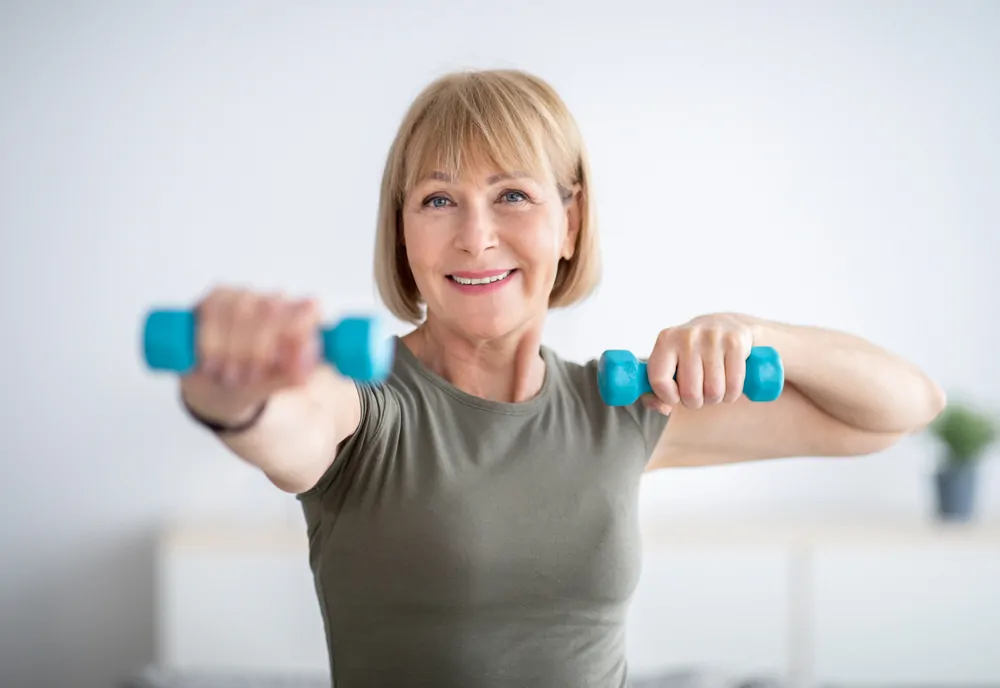
- Prioritise resistance/strength training: resistance exercises help counteract muscle loss, support bone health, and increase metabolism. Bodyweight exercises (such as these ones on our YouTube channel, specifically designed or those living with arthritis), resistance bands, and light weights can be incorporated into a routine tailored to your abilities.
- Concentrate on sleep hygiene: poor sleep can contribute to weight gain by increasing cortisol levels, which promote fat storage. Mindfulness meditation, and establishing a healthy sleep routine can support overall wellbeing.
In summary, weight management during menopause can be very challenging for many women. While menopause and arthritis do overlap in ways, each bring their own set of challenges. However, the ways to address the symptoms of menopause, such as weight gain, also overlap with the ways we manage arthritis. These aspects include improved nutrition, more movement, and lifestyle adjustments such as looking at our sleep hygiene, stress management techniques and the type of exercise we do. The good news is that, by making healthier choices, we can all hopefully navigate this stage of life with confidence and, in time, the small, consistent changes we make will add up to an improvement in, not just our waistlines, but also our overall mood and wellbeing.
Tips to help you through…
Listen to our podcast on Menopause and joint health with Dr Deirdre Lundy, head of Ireland’s first public menopause clinic in the National Maternity Hospital and Mary Gillespie, a registered Rheumatology Advanced Nurse Practitioner,
Tackle your diet once and for all with our blog, 5 top tips to move towards a wholefoods diet.
If you’re struggling with fatigue relating to hormones, read our blog 6 hacks to beat the afternoon slump.
If you find it hard to get into the habit of regular physical activity, read our blog Exercising for a positive mindset, which will motivate you for lots of different reasons to move more, not just weight.
Consider signing up for our flagship programme, Living Well with Arthritis (LWWA). If you need convincing, read our blog Empowering people to live better, which details the aspects of this course and how it could potentially benefit your life in so many ways.
Thank you to our sponsor

The Mindful Monday blog has been funded by Amgen Limited. The content has been provided and approved by Arthritis Ireland. Amgen Limited has had no influence over the content.
resources
Related Resources
 ‘But you look fine’: the challenges of living with an invisible illness
 Arthritis Ireland’s osteoporosis awareness campaign
 “I felt like I’d break if a child on the street bumped into me”
 Osteoporosis: 6 myths that could put your bones at risk
 Living with Osteoporosis with Dr Abuelmagd Abdalla
 Living with Osteoporosis
 Farming and arthritis
 Arthritis Ireland National Raffle 2026
Support Our Mission
Your donation helps us provide essential support, fund research, and improve the lives of those living with arthritis. Every contribution matters — help us make a difference today.
