



Everything you Need to Know about Bone Health

Everything you need to know about bone health
Did you know that it is entirely possible (and common) to have arthritis and osteoporosis at once, without being aware of it at all? In fact, many people don’t know they even have osteoporosis until they actually fracture a bone. However, although it doesn’t typically show symptoms, as it progresses, osteoporosis can lead to symptoms like back pain, joint pain, changes in posture and stooping – symptoms that nobody wants to deal with on top of an already existing arthritis condition.
What is osteoporosis?
Osteoporosis is a condition that makes your bones thinner and less dense than they should be (meaning they are susceptible to fractures). There are two main types of conditions that affect your bones – osteopenia and osteoporosis. Within this blog we are referring to both, but we will use the term ‘osteoporosis’ throughout. Osteopenia can be considered the first step toward osteoporosis, where your bone density is lower than normal, but not yet causing real problems, whereas osteoporosis typically involves more advanced bone density loss (causing light, fragile bones that place you at a significantly higher risk for fractures and breaks, even when you are doing simple daily activities).
The good news is that many of the self-management skills that you hopefully already have in place to help manage your arthritis symptoms will also be helpful to boost your bone health, as many of those things overlap. In fact, there is a lot you can do to help slow down any bone loss taking place now and prevent the risk of developing osteoporosis in the future.
How is bone strength tested?
To test bone density, your doctor may refer you for a DEXA scan – this is a high-precision type of X-ray that measures your bone mineral density and bone loss. If you have a lower-than-normal bone density score of between -1 and -2.5, you have osteopenia whereas, if your score is lower than -2.5, you may be diagnosed with osteoporosis. You can discuss with your healthcare team whether a DEXA scan would be a good idea in the near future, based on your arthritis condition, or the fact that you may have had recent fractures, even with seemingly minor falls.
What is the arthritis-osteoporosis link?
We know that inflammation is obviously a major feature of inflammatory forms of arthritis like rheumatoid arthritis (RA), axial spondyloarthritis (axSpA), psoriatic arthritis (PsA) or lupus, and that this contributes to joint pain and swelling. But did you know that this inflammation can also lead to cartilage damage that erodes the bone around the joint, thereby decreasing the mineral content of our bones? In addition, numerous observational studies have shown a strong link between osteoporosis and osteoarthritis (the most common form of arthritis, affecting almost half a million people in Ireland today), although more studies are needed to investigate this link in further detail. Research certainly indicates that more severe cases of osteoarthritis (with limited mobility and increased pain) may well accelerate bone loss that leads to osteoporosis.
There are other factors that put you at additional risk of osteoporosis, including;
- Being a smoker.
- Being someone who regularly drinks alcohol.
- Being sedentary.
- Being female (you are at a higher risk, although men can develop osteoporosis too).
- Being aged over 35 (osteoporosis tends to accelerate with age).
- Having a family history of osteoporosis.
- If you are going through menopause* (since depleted oestrogen levels impacts on bone health), or are experiencing hormonal changes.
- Having a thyroid condition.
- Having certain bowel or digestive diseases that decrease your ability to absorb calcium, such as inflammatory bowel disease or coeliac disease.
- Having a history of poor nutrition or of being very underweight.
- Being treated with corticosteroids (see below).
- Having a vitamin D deficiency (see below).
*Don’t miss our excellent podcast on menopause and joint health with Dr Deirdre Lundy, the head of Ireland’s first public menopause clinic in the National Maternity Hospital and Mary Gillespie, a registered Rheumatology Advanced Nurse Practitioner.
Are there special considerations for those with arthritis?
Yes, in addition to the effect that inflammation potentially has on your bones, there are other concerns. One of these is the use of corticosteroid medications (such as prednisone), which can – even at very low doses and over short periods of time – cause bone loss. Most rheumatologists are wary of the overuse of corticosteroids, however, sometimes they are necessary and recommended to reduce disease activity, such as during a flare. Add to that the fact that those who are deficient in vitamin D are at a greater risk of osteoporosis and there may be the ‘perfect storm’ for developing the condition, since many people with inflammatory forms of arthritis (such as lupus) are also photosensitive. These people may need to avoid or limit their exposure to the sun, which will likely lead to them being deficient in this vitamin (since the sun’s action on the skin is one of the main ways that the body produces vitamin D). For more information on arthritis-related photosensitivity read our blog.
What about diet?
While there isn’t a single diet specifically for promoting bone health, a Mediterranean diet is likely to be beneficial for osteoporosis. This happens to be the same type of diet that is recommended for those living with arthritis. It is essentially a healthy, balanced diet rich in fruits, vegetables, fish, wholegrains and pulses (like beans and lentils). Read more about the health benefits of the Mediterranean diet. In terms of the two crucial vitamins and minerals to include in relation to helping to prevent osteoporosis, these are calcium and vitamin D.
Dietary sources of calcium and vitamin D
Although diet is the best way to get calcium, supplements may be an option if your diet falls short. Good dietary sources include dairy products like cheese, milk and yoghurt, as well as dark green leafy vegetables, like broccoli and kale, fish with edible soft bones like sardines and canned salmon and calcium-fortified foods and drinks like cereals and non-dairy milks. In terms of vitamin D, this vitamin is essential in helping to absorb calcium in the gut, and also plays a pivotal role in our immune system (although more research is needed in this area). Unfortunately, very few foods contain this vitamin, so it is hard to get enough, even for the average person (and even for someone who is not photosensitive since Ireland gets relatively little sunshine during the autumn and winter months). Dietary sources of vitamin D include oily fish (salmon, tuna and mackerel), but most people don’t eat enough to meet daily targets, and only very small amounts are found in other foods, like meat, liver, dairy, egg yolks and fortified milks, cereals and yoghurts.
Should I supplement and, if so, how much?
To stem the effects of any deficiency, it is highly recommended that someone at risk of osteoporosis take both a calcium and vitamin D supplement (vitamin D also enhances the absorption of calcium). The advice is that everyone should consider taking a daily vitamin D supplement during the autumn and winter, whereas people at high risk of deficiency (so those living with arthritis) should take a daily supplement throughout the entire year. Although dosages vary by age and gender, the standard recommendation range is from 1,000-1,200 milligrams of calcium a day for adults and the recommended daily amount of vitamin D is roughly 600 IU (or 15 micrograms, sometimes displayed as ‘μg’ on packaging) for people ages 1-70 years, and 800 IU (or 20 micrograms/μg) for people over 70 years, although more may be recommended in someone who is deficient, based on their blood test results. Vitamin D supplements can be taken as a daily tablet, a spray onto the tongue or even as a high dose tablet taken once a month to ensure a consistent dosage.
Is it possible to take too much?
If you take calcium supplements and eat plenty of calcium-fortified foods, you may be getting more calcium than you realise. Check food and supplement labels to monitor how much total calcium you’re getting a day and whether you’re achieving the RDA but not exceeding the recommended upper limit. If you need help from a registered dietitian, you can contact the Irish Nutrition & Dietetic Institute (INDI). With vitamin D, it’s almost impossible to get too much from food and/or sunlight, and vitamin D toxicity from taking too high a dose via supplementation is very rare. In fact, the truth is that many people in Ireland are deficient in this vital vitamin due to our northerly latitude.
Your secret defense against brittle bones: Weight-bearing exercise
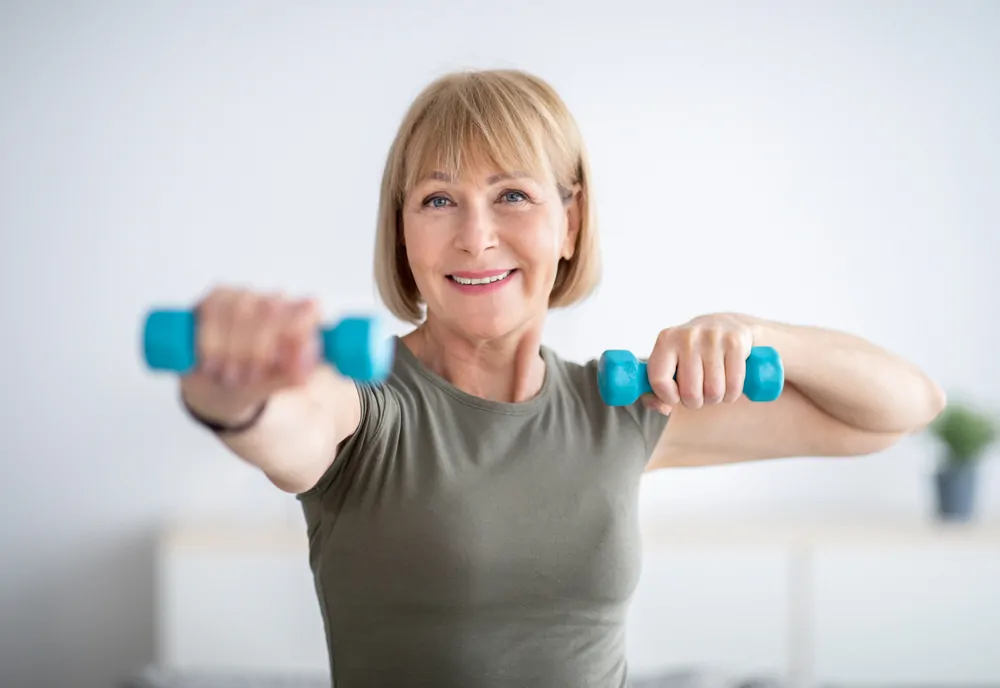
Possibly one of the best things that you can do to strengthen your bones is to engage in regular resistance training (two to three times a week), using either you own body weight (such as with yoga or Pilates), or with hand-held weights or weight machines in a gym. Regular weight-bearing exercise helps to improve bone density, so also make sure to include things like walking, gardening or dancing on five days of the week. Be mindful of the loss of muscle mass (and, therefore, strength and stability) as you age, which puts us at a higher risk of falling. Maintaining muscle mass plays a crucial part in maintaining our quality of life as we age. Of course, physical activity can be challenging in the presence of significant knee or hip arthritis but remember that keeping joints mobile is essential to help manage pain, inflammation and stiffness. To avail of one of our specially designed Arthritis Ireland classes, visit the ‘Physical Activity Classes‘ section of our website.
To sum it up…
If you are worried about developing osteoporosis in the future, you would be well advised to look at your diet, consider supplementation and also invest some time in weight-bearing exercise (including resistance exercises with your own body weight or hand-held/exercise machine weights). Similar to arthritis, there are simple steps that you can take now to help safeguard your bone health in the future. Many of those steps are similar to things that you are (hopefully) following anyway as part of the self-management side of living with your arthritis condition so this should not be complicated or overwhelming. If you are someone who does not yet engage in self-management skills and you want to learn more, there is no better place to start than enrolling on our free six-week Living Well with Arthritis (LWWA) programme.
Reducing your risk of falls
If your bones are already compromised, and you are concerned about falling, it’s worth downloading the Falls Prevention booklet from the HSE. If you have recently fallen, or are at a risk of a fall, ask your GP or other healthcare professional to conduct a ‘falls prevention and bone health risk assessment’ in order to determine your level of risk and further steps that can be taken to prevent that risk. For further information about osteoporosis, contact The Irish Osteoporosis Society or the Irish Nutrition & Dietetic Institute (INDI).
Thank you to our sponsor

The Mindful Monday blog has been funded by Amgen Limited. The content has been provided and approved by Arthritis Ireland. Amgen Limited has had no influence over the content.
resources
Related Resources
 ‘But you look fine’: the challenges of living with an invisible illness
 Arthritis Ireland’s osteoporosis awareness campaign
 “I felt like I’d break if a child on the street bumped into me”
 Osteoporosis: 6 myths that could put your bones at risk
 Living with Osteoporosis with Dr Abuelmagd Abdalla
 Living with Osteoporosis
 Farming and arthritis
 Arthritis Ireland National Raffle 2026
Support Our Mission
Your donation helps us provide essential support, fund research, and improve the lives of those living with arthritis. Every contribution matters — help us make a difference today.
