Arthritis Ireland

Channelling pain into purpose: a course leader

image

Channelling pain into purpose: a course leader

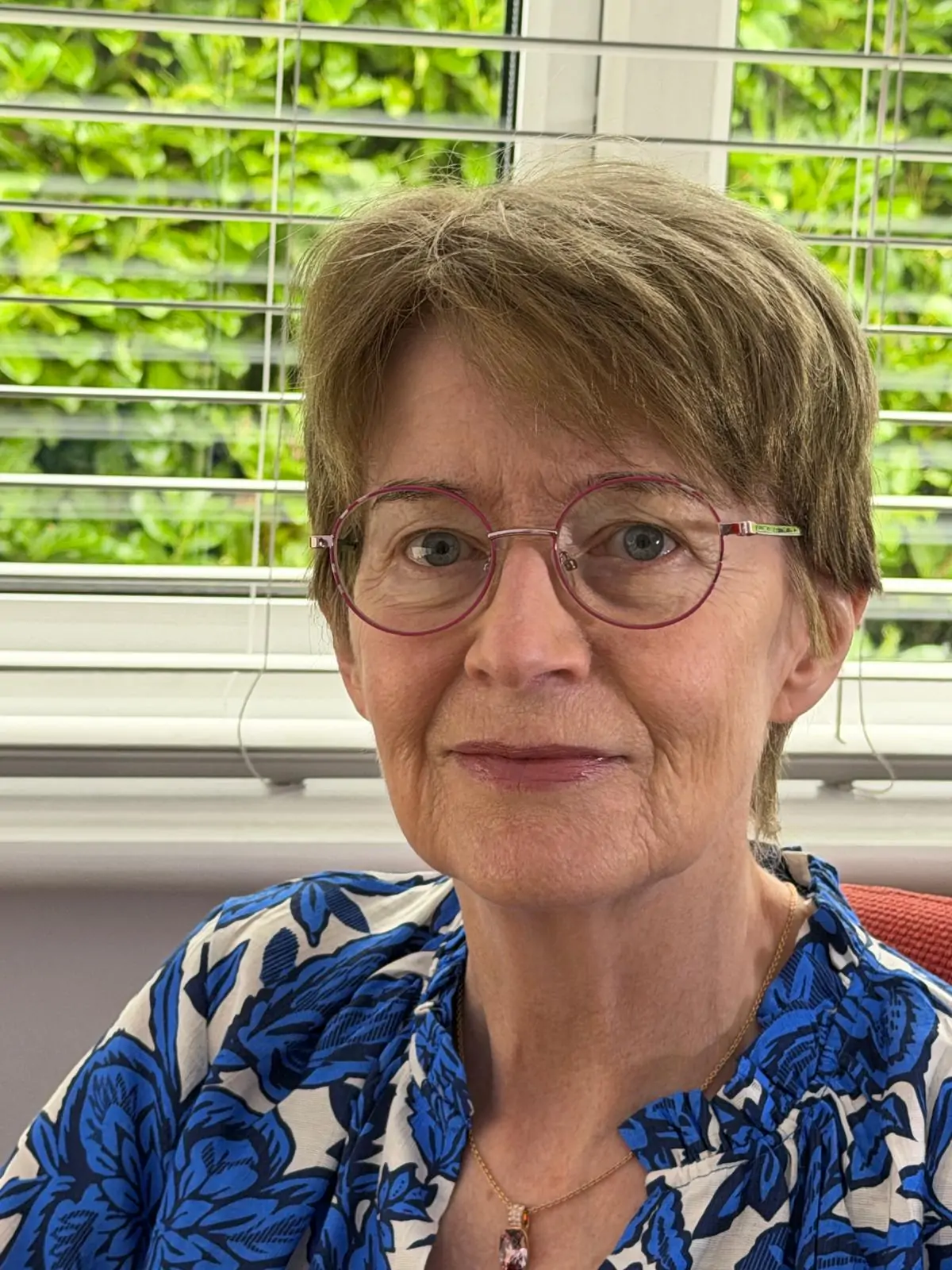
Kathy Carroll, now in her forties, was diagnosed with multiple chronic health conditions when she was just thirty years old. The debilitating fatigue and pain compelled her to give up her beloved teaching career. However, after completing an Arthritis Ireland self-management course soon after, she trained to become a course leader of the living well with arthritis and related conditions programme as well as the living well with pain programme and she hasn’t looked back since.

Knowing something was very wrong

“It all started with debilitating fatigue, and then mobility problems, particularly in my hips and legs. I was out of sync, and I knew something was wrong, but I still didn’t have a diagnosis – that was perhaps the hardest time. I had to give up sports I enjoyed, like tennis and Zumba. Even walking became very painful. I found myself in a space where I didn’t really know who I was any more.

“I was a teacher at the time, but I was really struggling. Even today, I don’t know how I got through because I’d just push myself and then collapse and sleep all weekend. But then, suddenly, everything slowed down, and I had to give up teaching. I was sixteen years teaching – it was a real vocation – and, although it was the last thing I wanted, I guess my body made the decision for me to eventually give it up.”

One diagnosis piling on top of another

“At the time, I was picking up every infection under the sun, and I was in and out of hospital for tests. I would then develop myalgia (muscle pain), and a lot of pain in my legs and hips. I’m adopted so I didn’t have medical history, which was even more challenging as the specialists were struggling to find out what condition my symptoms were attributed to.

“Then there was almost a sense of relief when I was diagnosed with the autoimmune condition, Hashimoto’s disease, followed by PCOS (polycystic ovary syndrome). Soon after, I was diagnosed with iron-deficient anaemia and pernicious anaemia. Later on, I received other diagnoses including microscopic colitis, migraine, lyme disease and fibromyalgia.

The effects on my wellbeing

“Having to give up work hit me hard. But now, looking back, I realise I was putting so much judgement on myself at the time. I was unkind to myself. I was self-sabotaging – for instance, even when I was making progress with my walking, however small, I would say, ‘But you should be doing so much more’ or ‘You shouldn’t have to give up work – maybe you’re just lazy’.

“Of course, then there’s the reality of living with a hidden illness. No matter how well meaning, there can be a real lack of understanding from others. If you had a cast on your leg, people would see it and sympathise and, of course, there’s a timeline for recovery. Many people don’t understand the very nature of a chronic illness – they’d sometimes ask me, ‘Are you better yet? Then there was the isolation. I simply couldn’t keep up. My energy wasn’t just low – I also wasn’t great at managing it, or pacing myself, as I’ve learnt now. I’d push myself and then I’d be floored for a long time afterwards.”

Learning the tools

“So I signed up, as a participant, to the evidence-based Living Well with Arthritis (LWWA) programme offered by Arthritis Ireland. What really struck me, straight away, was that one of the leaders was living with a chronic condition. I realised that this was a safe space where you could discuss things with other people going through the same thing.

“When you develop a chronic condition, everything in your life can become smaller – your social circle and your day-to-day activities become limited. But others in the group just got that. And that understanding really helped to lift the fog and the haze I was in. I was able to see what I could do, rather than focus on what I couldn’t do. Over the duration of the six-week course, I was introduced to all these tools – life skills really. We covered things like problem-solving, decision-making and action-planning. That allowed me to break my goals (which sometimes seemed impossible) down into smaller things that were achievable. Then there was the accountability – having to feed back into the group the following week on how I got on was a game-changer.

Giving something back

“That’s when I decided that I had gained so much that I really want to give back. So, I undertook the training to become a course facilitator. Of course, what I didn’t realise then was the benefit that it would be to me also. Every single time I deliver a course, it’s like a constant refresher for me as well! You pick up a new nugget of information, or even something someone else says, and it benefits you in a huge way.

“I find it hugely rewarding. I see someone who may be a bit skeptical at the beginning, and I watch them evolve. At the end, we all look back and share what we’ve learnt and accomplished and it’s just inspiring. You can see that shift and that confidence return in people. It’s about being able to take back some control.”

Learning the 12 self-management tools

“When you think about it, we spend a short time in front of rheumatologists and other members of our healthcare team. It’s us who are really managing the condition the rest of the time so it’s key to equip yourself with the knowledge and tools. There is no magic wand to wave – often it’s about learning the basics. But that, as well as getting the support from other members of the group, all adds up to empowerment.

“Course participants also receive what I call ‘the chronic illness bible’ – which is the book that all participants get. It’s amazing – you can dip in and out of it and I still use mine regularly. The focus is on twelve tools for self-management and how to break the symptom cycle at different points. The symptom cycle has the knack of repairing itself so it’s all about asking yourself what do you need in that moment that’s going to help you take control back and self-manage. That can mean looking at sleep and fatigue. It’s really about going back to basics – looking at sleep hygiene. I also sign-post people to the Arthritis Ireland website, where they can find podcasts, blogs, videos and more. For instance, the Annie Curtis podcast on sleep is just amazing, as is the webinar on the impact of sleep, stress and social connection.

Pacing is essential

“Pacing is learnt on the course in a very real way. Some people think they won’t be able to do the programme – it’s two and a half hours. They think ‘There’s no way I could sit or concentrate for that amount of time.’ I myself would have that concern too. But you realise you don’t have to. We take stretch breaks. We really encourage people to mind themselves and take what time they need, whether that means just closing your eyes and listening for a while, without participating, or taking some time to step outside.

“We’re conditioned to push through, but it’s important to learn to adapt to your condition which takes time. Adapting to what can I do rather than having the mindset of well I used to be able to this and now I can’t. We encourage participants to think how much they have in the tank at the start of the day, and to think about what they want to get out of their day. But it’s important to be flexible with it – it’s okay if you can’t do that thing and you have to adjust your plan. If your energy is low, you may need to modify and change that plan. You may have planned to go walking, but your body may be telling you to rest, and that needs to be listened to.”

Learning to communicate differently

“Another tool that is learnt on the course is communication. It can be a challenging one, but it covers all aspects, including asking for help from loved ones and advocating for yourself at healthcare appointments. It’s about accepting help but also being able to say ‘no thanks’ to help when necessary. Using the ‘I’ message really helps (ie. ‘I am struggling and need more help’). But it’s also about how we communicate with ourselves as we can be so hard on ourselves and that’s not helpful.

“When you have a chronic condition, your body is so unpredictable. You lose confidence. But using these tools to self-manage and break that cycle is really empowering. They are designed for anyone living with arthritis and related conditions, but they can benefit really anyone. People come on the courses and say, ‘I’ve had this a very long time’, but it doesn’t matter where you are on your journey – you’ll always get something from this programme. Participants also use it as a stepping stone to the next thing. Once they get their confidence back, then they might go and do another Arthritis Ireland course, such as the Living well with pain programme. Or they might join an adapted exercise class. I am able to deliver these amazing programmes and make a difference. And, with that, I am building momentum and I am really proud of myself.”

My life today

“I’m a family caregiver for my incredible parents as well as a course facilitator. My mam is ninety-one and my dad is ninety so, between looking after them and managing my own conditions (I have a lot of hospital appointments), I’m able to do a lot more than I used to. Unfortunately, I developed long covid – and that set me back. I had to do a lot of rehab and physio. But it’s a huge accomplishment being able to bring my dog Chip on short walks now. I aim to build on that, and I will sometimes walk a bit further, and sit on a bench to rest.

“I also practice a lot of mindfulness, yoga and the moving easy programme ( a gentle flexibility routine from the Living well with pain programme). For exercises or movements I can no longer do, I use visualisation to imagine myself doing the movement. This is research-backed, and can be hugely helpful for those who have limited mobility. I’ve also recently been able to go back to seated music gigs which is something I really missed during the pandemic. I’ve also completed the Be Active with Arthritis (BAWA) programme, and I found that really beneficial. My mam, who has osteoarthritis, is really enjoying the t’ai chi class online.

“I’ve had to adapt my life, which has taken a lot of time and effort but it’s okay – because look where I am now compared to where I was. I’ve so much to be grateful for in my life. I’m able to spend time with family and friends, I enjoy being in nature and doing a bit of gardening. I’m able to do short walks with my rescue dog Chip. And I’m able to deliver these amazing programmes and make a difference. And, with that, I am building momentum and I am really proud of myself.”

For more information…

To read more personal stories about living well with arthritis, visit the Lived experiences section of our website.

If you are looking for advice or emotional support around living with arthritis, ring our helpline on 0818 252 846 or send your question by email to: [email protected].

Related Resources

Support Our Mission

Your donation helps us provide essential support, fund research, and improve the lives of those living with arthritis. Every contribution matters — help us make a difference today.

loading...